
How to Start a Childcare Business in Australia: Why Quality Matters More Than Competition
Australia’s childcare sector continues to attract investors, developers and operators seeking stable, long-term opportunities. However, one of the biggest misconceptions in childcare development is that success is simply about finding an area with high demand and low supply.
In reality, successful childcare centres are built by identifying opportunities to deliver something better than what already exists. Understanding the quality of existing childcare services is often more important than simply counting how many centres operate in a catchment.
Looking Beyond Supply and Demand
Many feasibility studies focus on population growth, childcare places and occupancy rates. While these metrics are important, they only tell part of the story.
A common mistake is assuming that a market is saturated because several childcare centres already operate nearby. However, if those centres are outdated, poorly designed, difficult to access, or fail to meet the expectations of modern families, there may be significant opportunity for a new, higher-quality service.
Consider a simple example: if every takeaway shop in town serves average-quality chips and one operator introduces fresh, premium-quality chips, customers will often choose the better product regardless of the number of competitors.
The same principle applies to childcare.
Families increasingly prioritise quality, safety, convenience and learning environments when choosing a childcare centre. A well-designed, high-quality service can outperform competitors even in established markets.
Identifying Gaps in the Market
Rather than asking, “How many childcare centres are nearby?”, a more valuable question is:
“What are local families not currently receiving?”
Potential opportunities may include:
- Higher-quality educational environments
- Better outdoor play experiences
- Improved safety and supervision
- Longer operating hours
- Easier parent drop-off and pick-up access
- Modern facilities and learning spaces
- Stronger connections to local communities
Understanding these gaps helps developers and operators position a new centre to meet unmet demand rather than simply adding supply.
Why Childcare Centre Design Matters
Centre design is one of the most significant contributors to long-term success.
A childcare centre is far more than a building—it directly influences children’s safety, staff efficiency, family satisfaction and enrolment outcomes.
Key design considerations include:
Safety First
Every aspect of a childcare centre should prioritise child safety.
Effective design incorporates:
- Clear sightlines for supervision
- Secure entry and exit points
- Separation of age-specific learning environments
- Safe traffic flow for parents and staff
- Compliance with National Quality Framework requirements
Strong visual supervision allows educators to monitor children effectively while creating a safer learning environment.
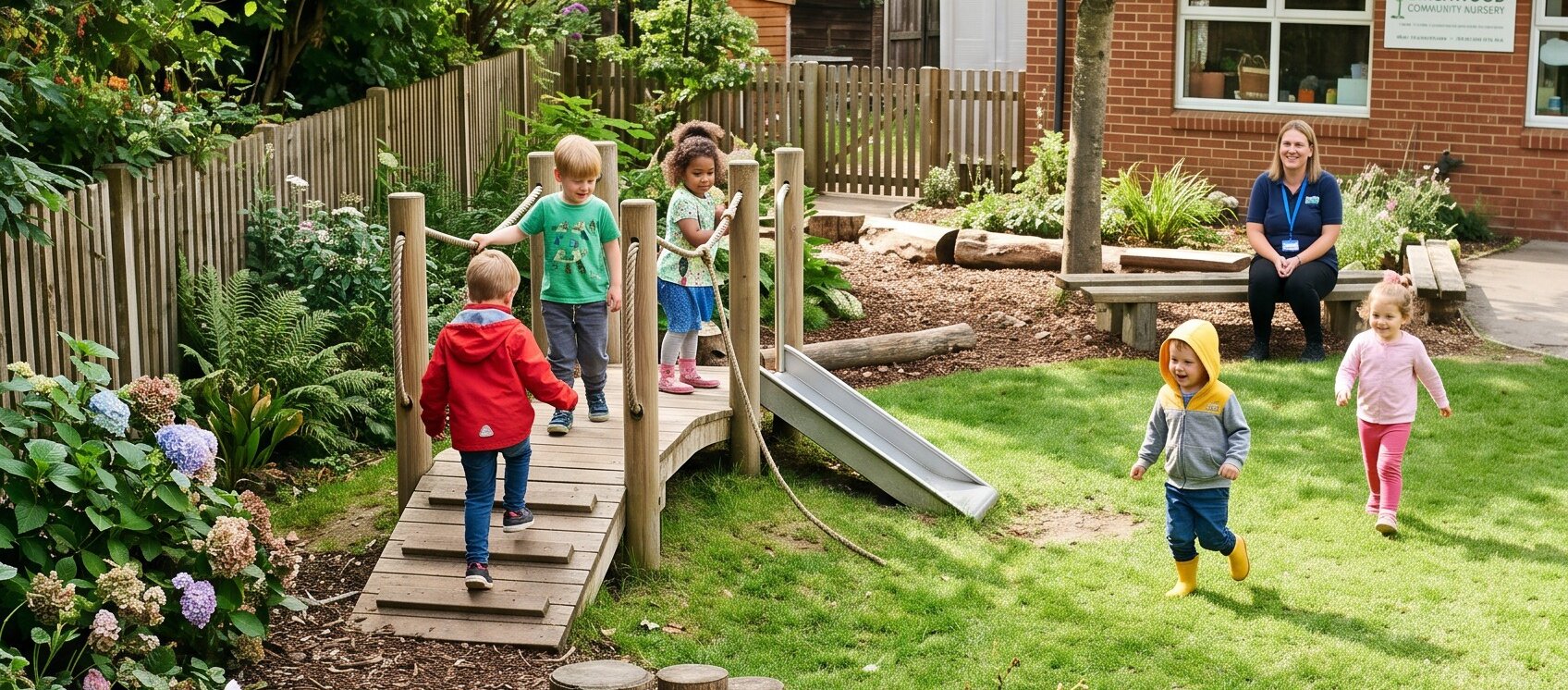
Outdoor Play and Learning
Outdoor environments are increasingly important to families and regulators alike.
Well-designed outdoor spaces provide:
- Opportunities for physical development
- Nature-based learning experiences
- Shaded play areas
- Age-appropriate equipment
- Flexible spaces for exploration and creativity
Quality outdoor environments often become a key differentiator between childcare services.
Convenient Access
Parents value convenience.
Successful centres typically offer:
- Safe vehicle access
- Efficient drop-off and pick-up zones
- Clear traffic circulation
- Accessibility for prams and mobility aids
- Connections to major roads and residential communities
Poor access can become a daily frustration for families and negatively impact enrolment demand.
Strong Visual Presence
A childcare centre’s external presentation plays a significant role in attracting families.
Centres with strong visual presence benefit from:
- Greater brand recognition
- Increased community awareness
- Enhanced perceived quality
- Improved enquiry generation
Thoughtful architecture and street appeal can significantly influence first impressions and occupancy growth.
Choosing the Right Site
The ideal childcare site balances demographic demand with the ability to deliver a superior service.
Important factors include:
- Family demographics
- Population growth
- Residential development activity
- Road exposure and visibility
- Access and parking
- Site size and layout
- Potential for quality centre design
This is where a comprehensive Highest and Best Use (HBU) assessment becomes invaluable. Rather than focusing solely on demand metrics, an HBU analysis evaluates whether a site can support a childcare centre that genuinely stands out within its market.
Planning for Long-Term Success
Starting a childcare business requires more than securing approvals and constructing a building.
The most successful projects combine:
- Strong market analysis
- Strategic site selection
- High-quality centre design
- Safe and engaging learning environments
- Operational efficiency
- A clear point of difference
When these elements work together, childcare centres can achieve strong occupancy, attract quality staff and create lasting value for both families and investors.
Final Thoughts
The best childcare opportunities are not always found in locations with the least competition. Often, they are found where existing services fail to deliver the quality, accessibility and experience that modern families expect.
Understanding market gaps, prioritising exceptional design and creating a genuinely superior childcare environment can be far more important than simply measuring supply and demand.
At Mollard Property Group, we help developers, investors and operators identify childcare opportunities through detailed Highest and Best Use assessments, site acquisition, feasibility analysis, development management and specialist childcare advisory services.