
The 2036 Yield Shift: How AI and Demographics Are Rewriting Real Estate
Intelligence Briefing by Mollard Property Group
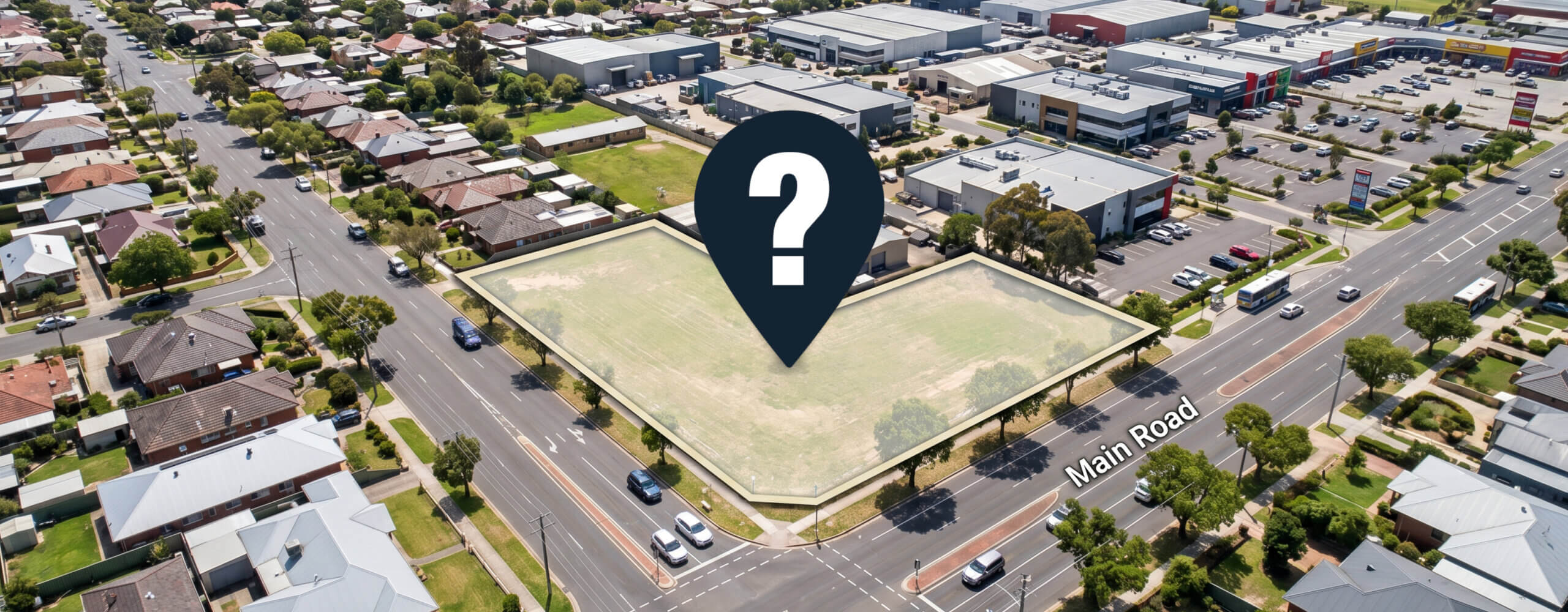
At Mollard Property Group, our Highest & Best Use (HBU) Engine does not just model present-day feasibility; it stress-tests land against future demographic velocity.
Looking at the data for Melbourne in 2026, we are standing at the edge of a massive structural pivot in how the 20- to 35-year-old cohort interacts with real estate. Currently, this demographic is caught in a squeeze: sticky interest rates, a tight rental market, and a demand for high-amenity, flexible lifestyles that traditional “quarter-acre block” housing no longer satisfies.
But fast forward to 2036, and the integration of AI, autonomous systems, and advanced material science will fundamentally rewrite the Australian property market. For developers and institutional investors, understanding this shift is the key to protecting future yield.
Here is the strategic breakdown of what this demographic demands now, and the asset classes that will dominate by 2036.
The Now (2026): The Transitional Squeeze
Right now, Melbourne’s 20- to 35-year-olds are prioritising Access over Ownership. Institutional capital is already capitalising on this through targeted asset classes:
- The Rise of Build-to-Rent (BTR) & Premium Co-Living: This cohort is sacrificing square footage for premium shared amenities (rooftop gardens, podcast studios, commercial-grade kitchens). Suburbs like Brunswick, South Yarra, and Footscray are seeing a massive surge in purpose-built rental communities.
- Hyper-Connectivity: Proximity to tram lines and the evolving Suburban Rail Loop (SRL) is non-negotiable. If a site isn’t connected, its yield ceiling drops.
- The Hybrid-Home: Post-pandemic, a home is fundamentally a workspace. Fast fiber and acoustic separation in micro-apartments are highly sought after.
- Eco-Anxiety & OpEx Cost: They demand solar-powered, high-energy-rating homes – not just for environmental reasons, but to shield themselves from volatile energy grid costs.
The Future (2036): Automated, Bio-Integrated Hubs
By 2036, the traditional 30-year mortgage for a static suburban home will be obsolete for this demographic. Driven by the macro-trends of AI automation and regional tech-hubs, here is the new baseline for development in Victoria.
- Decentralised “Tech-Hub” Regional Living As automation wipes out the need to commute to the CBD for knowledge work, we will see a mass migration to regional “Tech-Hubs” (elevated tech-precincts in Geelong, Ballarat, or coastal nodes). These will not be sleepy towns, but high-density, hyper-connected micro-cities. Young professionals will live in modular smart-pods that plug directly into these hubs, surrounded by high-speed autonomous transit corridors.
- Tokenised & Fluid Ownership (PropTech 3.0) The 2036 cohort won’t buy houses; they will buy shares in living networks. Using blockchain and smart contracts, a 28-year-old will own a 5% fractional stake in a Melbourne building and a 2% stake in a Queensland automated eco-resort, with the right to move seamlessly between network properties. “Rent” will become a subscription to a fluid living ecosystem.
- AI-Managed “Zero-Cost” Living Environments Homes will become active economic assets rather than passive liabilities. Buildings will be constructed using advanced material science, utilizing systems like full basalt-MgO panel models rather than traditional framing, to create carbon-negative, rapid-deployment structures. The building’s AI will autonomously trade solar energy stored in onsite batteries back to the national grid during peak times, entirely offsetting the residents’ living costs.
- Bio-Integrated & Self-Sustaining Architecture The demand for health and sustainability will mandate homes that actively maintain wellness. Expect to see algae-infused biopolymer facades that purify urban air, and automated, robotic vertical farming built directly into apartment complex atriums. The 2036 resident will have their organic produce harvested autonomously by the building’s internal systems.
- Hyper-Personalised, Transformable Spaces Space will be at an absolute premium in desirable nodes, meaning static floor plans will die. We will see the mainstreaming of robotic, transformable interiors. Through a voice command to the home’s AI, the space will physically shift – walls retracting, beds lifting into ceilings – transforming a sleek bedroom into a holographic workspace, and then into a dining area for entertaining, all within a 40-square-meter footprint.
The MPG Advantage for Investors & Developers
To capitalise on this 10-year swing, smart capital must move away from traditional suburban sprawl. The edge lies in acquiring land along autonomous transit corridors and engineering AI-integrated, fractional-ownership co-living spaces built with advanced materials. The future of Australian property is not just about providing shelter; it is about engineering a high-tech, frictionless, and sustainable operating system for living. At Mollard Property Group, we do not guess what the market is doing. We calculate it.
Our proprietary Highest & Best Use (HBU) Engine models your site against 207 alternative use cases – including emerging BTR, co-living, and social infrastructure models – to mathematically prove the single most profitable development pathway.
Before you drop $50k on a traditional town planner to tell you what you already know, let our Engine give you institutional-grade conviction in 7 working days.
Are you acquiring a site or sitting on stalled land? Contact Mollard Property Group today to request a rapid HBU Assessment.